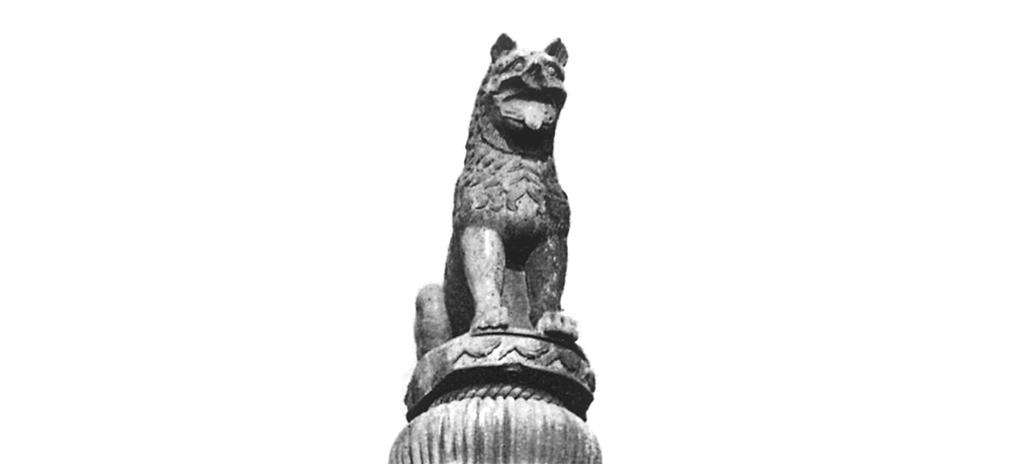
Lauriya Nandangarh Ashoka Pillar capital, via Wikipedia Commons.
Speaker: Max Deeg, Professor in Buddhist Studies (Cardiff University, Wales, UK)
Date and Time: Friday, June 26, 16:00-17:30
Location: 東京大学東洋文化研究所3階大会議室
Abstract:The ‘Xuanzang Trail’ project was initiated in 2019 by Dr. Bijoy Chaudhary, the previous director of the K.P.Jayaswal Research Institute in Patna (Bihar, India), at that time the Executive Director of the Bihar Heritage Development Society (BHDS). The basic conceptual idea was to explore the historical and archaeological landscape of the Indian state of Bihar following the trajectory of the ‘Record of the Western Region of the Great Tang’ of well-known Chinese Buddhist traveller-monk Xuanzang (first half of the 7th century). The Project was planned and executed in collaboration between Dr. Chaudhary and Professor Deeg (as PIs) and undertook four exploration tours between the years 2020 and 2024 in what was the heartland of Buddhism, ancient Magadha south of the Ganges River, and in the northern part of Bihar. The aim was to revisit some well-known, but also not so well-known sites with the help of the Chinese text of the Record, an endeavour which had already stood at the very beginning of Buddhist South-Asian archaeology in the second half of the 19th century, mainly through the work and personality of Alexander Cunningham (1814-1893). This talk will introduce the Project and its work and will present and discuss some selected case studies which consisted in a mapping and re-mapping of the historical-archaeological landscape from Lauriya Nandingaṛh in the north to Bodhgayā in the south.