Return to the main program page.
Return to the Student Reports page.
By Mingjun JIN, Sichuan University
From July 7 to 14, 2026, forty-six emerging scholars gathered at Mount Kuaiji in Shaoxing, Zhejiang, for the 2026 Glorisun International Intensive Summer Program for Buddhist Studies. The program was sponsored by the Glorisun Global Network for Buddhist Studies (Peking University) and the Peking University “One Thousand Books in One Century” Project, co-sponsored by the College of Asian Civilizations at Zhejiang University, and hosted by the Mount Kuaiji Advanced Institute for Buddhist Studies in Shaoxing. Over the course of one week, participants took part in an international conference, intensive seminars, guest lectures, scholarly discussions, and visits to Buddhist and cultural sites.
Supported by the educational resources of the Glorisun Global Network for Buddhist Studies, the program has been held each summer since 2018 at partner universities and institutions across the network. Its collaborators have included Peking University, the University of British Columbia, the University of Hamburg, Princeton University, the University of Oxford, the University of Cambridge, Yale University, the University of California, Berkeley, Harvard University FAS CAMLab, the University of Hong Kong, the Hebrew University of Jerusalem, Zhejiang University, the University of Tokyo, and the Institut national des langues et civilisations orientales (Inalco) (https://glorisunglobalnetwork.org). The program is coordinated by From the Ground Up: Buddhism and East Asian Religions (FROGBEAR) at the University of British Columbia. It seeks to advance multi-level cooperation and methodological innovation in Buddhist Studies while cultivating young researchers with strong academic foundations, interdisciplinary abilities, and an international outlook.
This year’s participants came from leading universities and Buddhist research institutions in China and abroad. The cohort included master’s and doctoral students, postdoctoral fellows, and early-career scholars, as well as more than twenty young Buddhist monastics with substantial research training. The meeting of different cultural backgrounds, scholarly traditions, and research perspectives at Mount Kuaiji fostered an academic environment that was open, diverse, and intellectually engaging.
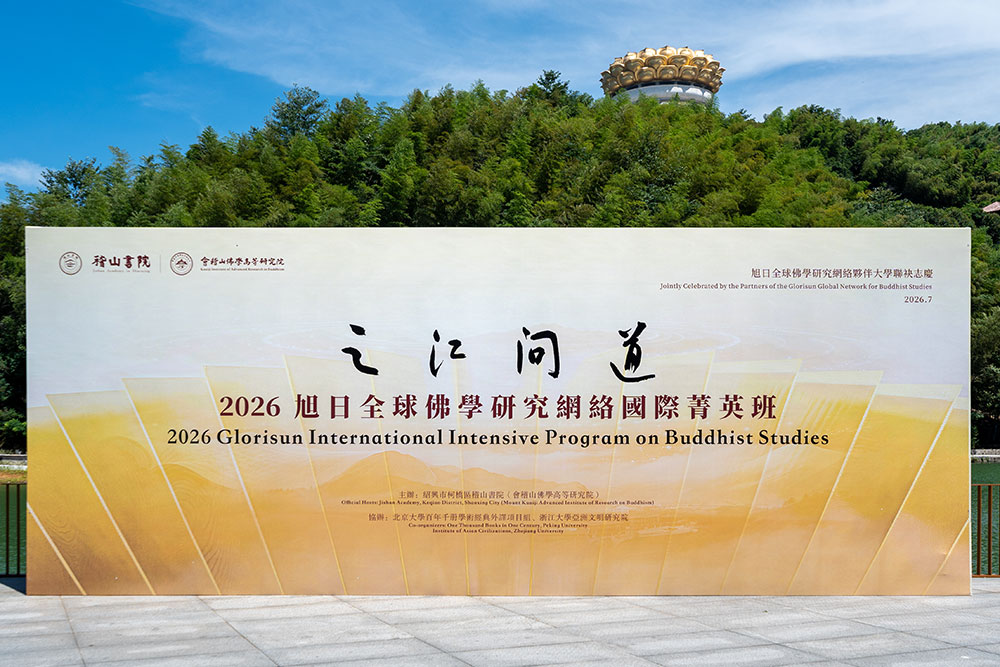
Outdoor poster for the 2026 Glorisun International Intensive Summer Program for Buddhist Studies, displayed at Mount Kuaiji Advanced Institute for Buddhist Studies, Shaoxing. Republished with permission.
Conference and Opening Ceremony
The program opened with the international conference “‘Translation across the Four Directions’: Buddhist Translation Institutions, Canon Formation, and the Translingual Shaping of Asian Civilizations,” held from July 7 to 10. Following this, intensive seminars and lectures took place from July 10 to 13, with the final two days devoted to cultural visits and departures. During the conference, participants examined Buddhist translation, translation institutions, the formation of texts, the circulation of knowledge, and exchanges among Asian civilizations. Approaching these subjects through language, literature, intellectual history, institutions, and religious practice, the speakers considered how Buddhism was translated, reconfigured, and recreated as it moved across regions and cultures.
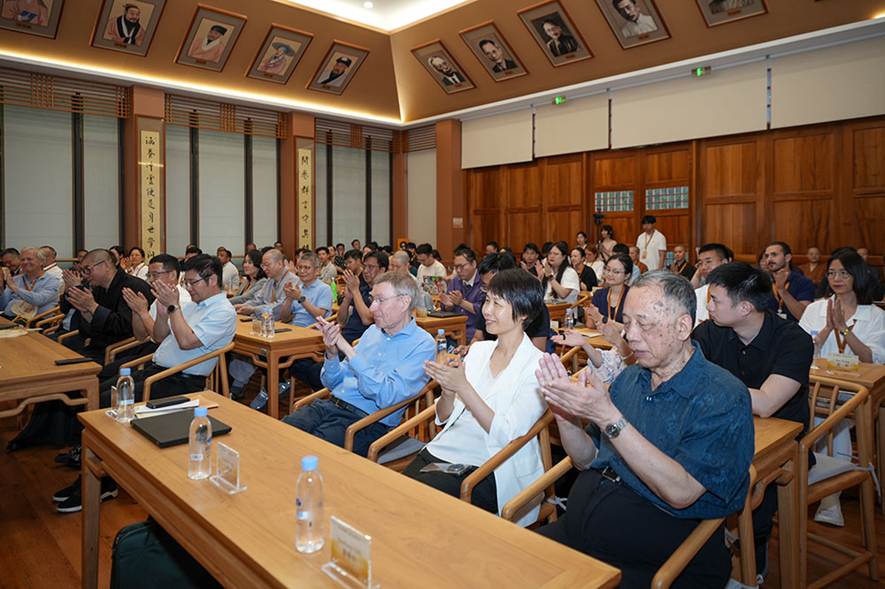
Opening ceremony of the summer program and the conference. Republished with permission.
The opening ceremony for the intensive seminars and lecture series was held on the afternoon of July 10 at Jishan Academy in Shaoxing. Professor Jinhua CHEN of the University of British Columbia began by thanking the Glorisun Global Network and the institutions that supported the program. He expressed particular gratitude to Dr. Charles YEUNG, founder of the Glorisun Charitable Foundation; Venerable Professor Ru ZHAN, Director of the Center for Buddhist Texts and Arts at Peking University and the Board Director of the Glorisun Global Network; and the scholars who had travelled to Mount Kuaiji to teach and exchange ideas. Welcoming participants from around the world, Chen encouraged them to make full use of the program, broaden their scholarly horizons, and deepen their research through sustained conversation.
Professors Imre GALAMBOS of the University of Cambridge and Zhejiang University, Barend ter HAAR of the University of Hamburg, and Michael FRIEDRICH of the University of Hamburg also delivered welcoming remarks. Each emphasized the value of the international platform created by the program and encouraged participants to form lasting intellectual connections, exchange ideas freely, and learn from encounters among different scholarly traditions and methodologies.
On behalf of the local civic organizations, the ceremony was attended by Weijun CHEN, Member of the Standing Committee of the CPC Shaoxing Municipal Committee and Head of its United Front Work Department; Jian YUAN, Member of the Standing Committee of the CPC Shaoxing Municipal Committee and Secretary of the CPC Keqiao District Committee; Youmei FANG, Member of the Standing Committee of the CPC Keqiao District Committee and Head of its United Front Work Department; Jianxing ZHAO, Director of the Keqiao District Ethnic and Religious Affairs Bureau; and other distinguished guests. Jian Yuan addressed the gathering on behalf of the CPC Keqiao District Committee and the Keqiao District People’s Government. Representing the student participants, postdoctoral fellows Nadine BREGLER from the University of Hamburg and Haochen LIAN from Peking University shared their expectations for the week of study and exchange during the session.
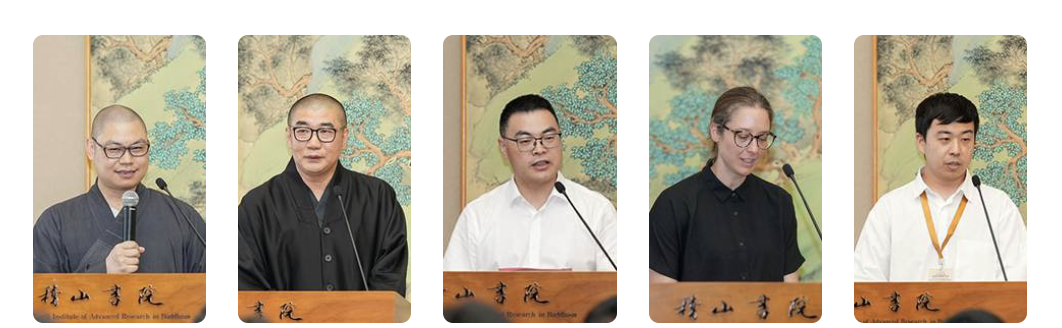
From left to right: Venerable Dao Wu, Venerable Professor Ru Zhan, Weijun Chen, Nadine Bregler, and Haocheng Lian. Republished with permission.
Intensive Seminars and Lectures: New Approaches to Religious Transmission and History
The core seminars were led by Professors Jinhua Chen, Imre Galambos, Barend ter Haar, and Michael Friedrich. Their courses approached Asian religious transmission and historical change from four complementary directions: multilingual religious texts, transregional networks of Buddhist transmission, paratextual materials, and the relationship between Buddhism and Daoism from the Eastern Han through the early medieval period. Together, the seminars demonstrated how multilingual sources, archaeological evidence, material texts, and social-historical methods can reshape the study of Asian religions.
In “Unidirectionality, bidirectionality and Radiality, Locality, Globality, and Glocality: Reconfiguring Transregional and Transcultural Networks of Buddhist Transmission in Asia,” Chen challenged linear models in which Buddhism simply moved outward from a single center. He described Buddhist transmission instead as a multidirectional and multicentered process shaped by travelling monks, merchants, migration, scriptures, images, and monasteries. Through case studies on the circulation of religious information, the cult of Bodhi images in Tang Chang’an, and Shengshan Monastery in Luoyang, the course examined how Buddhist ideas were transformed as they entered new settings and became entangled with political, economic, and local cultural forces.
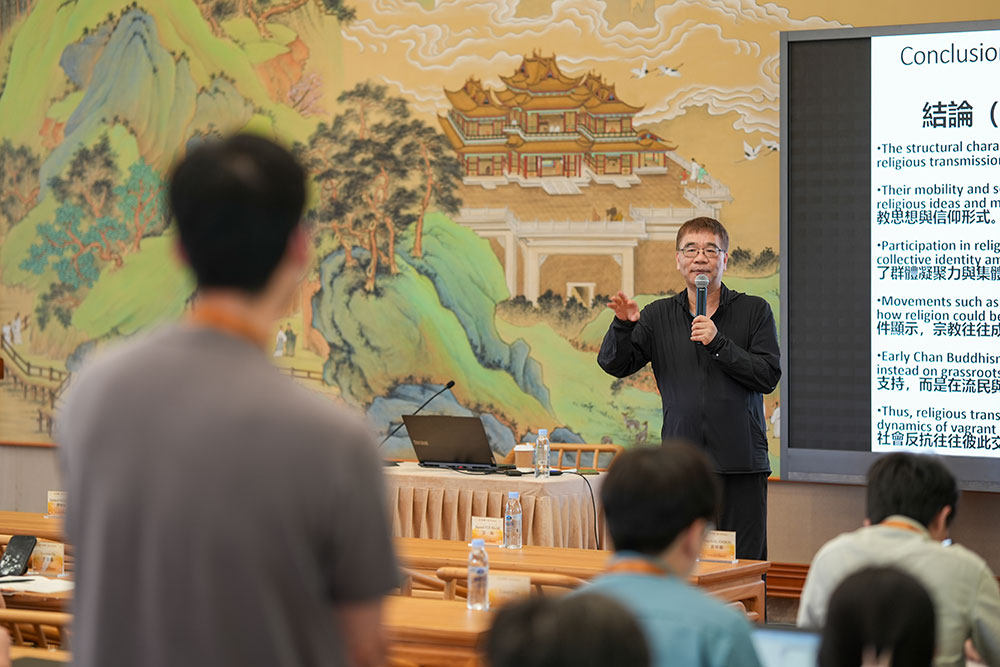
Seminar session led by Professor Jinhua Chen. Republished with permission.
Galambos’s seminar, “Religious Texts across Languages in Northwest China,” focused on multilingual manuscripts recovered from sites along the Silk Road. Galambos explored how religious texts crossed linguistic, regional, and political boundaries through translation, phonetic transcription, and reinterpretation. The manuscripts also revealed forms of interaction beyond translation, including the use of Chinese characters to represent Sanskrit sounds and Tibetan letters to transcribe Chinese texts. By attending to binding, page layout, punctuation, spacing, and other material features, participants learned to treat manuscripts not only as carriers of words but also as cultural objects that preserve evidence of contact among languages, communities, and manuscript traditions.
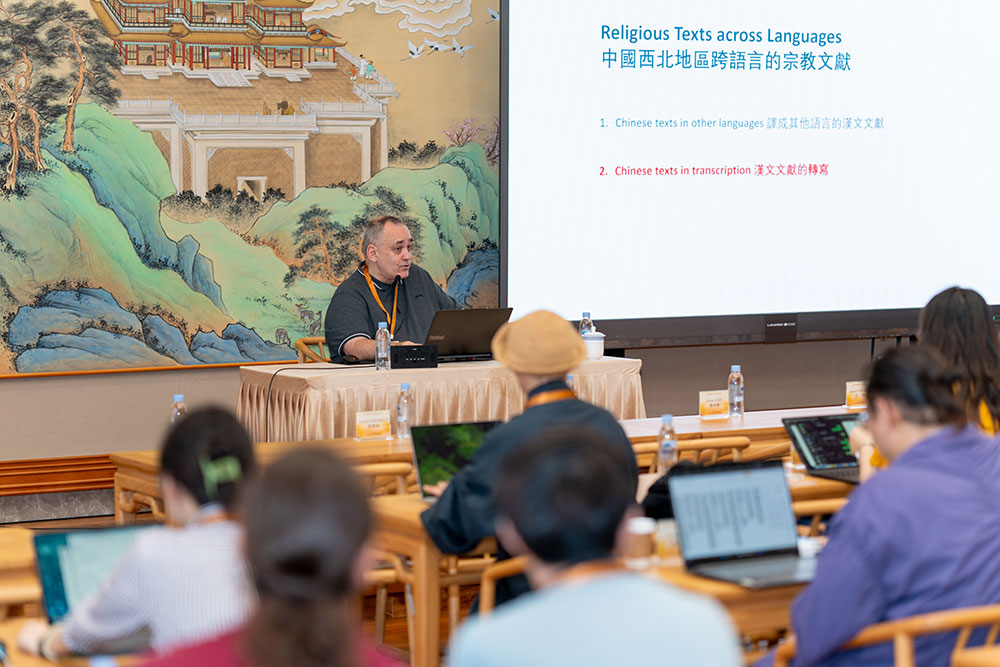
Seminar session led by Professor Imre Galambos. Republished with permission.
Ter Haar’s “The Use of Paratexts for Studying Social and Religious History” drew attention to materials often treated as secondary to a main text: prefaces, postscripts, colophons, copying notes, doodles, and inscriptions on the reverse sides of stone monuments. Ter Haar showed that such paratexts can help establish dates, authorship, and transmission histories while also illuminating how texts were produced, used, and received in particular social settings. Close reading of these materials, he argued, opens new routes into the religious practices, social relationships, political structures, and economic activities surrounding a text.
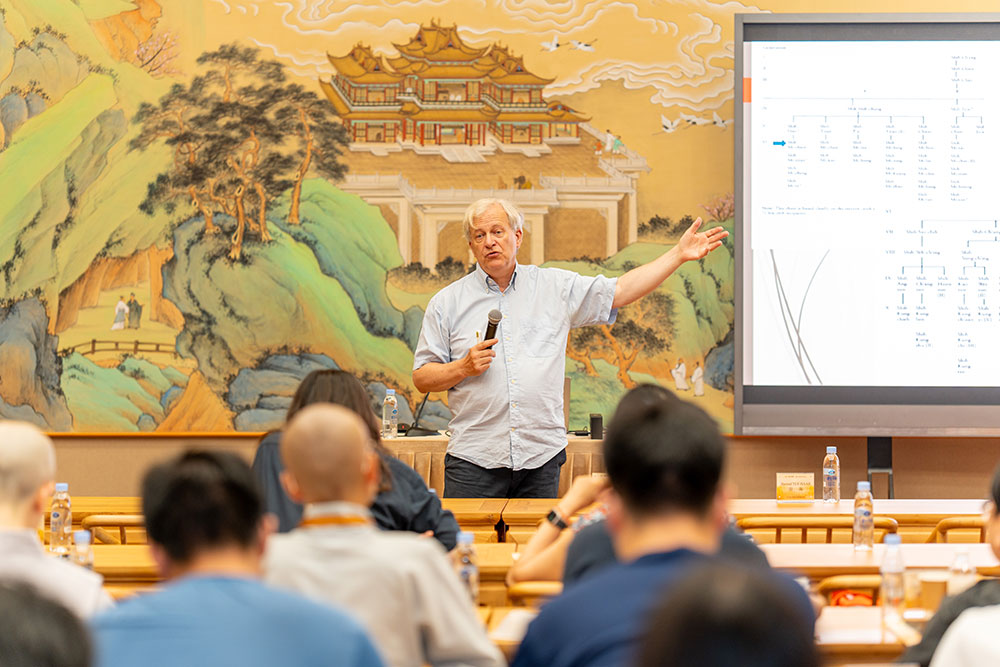
Seminar session led by Professor Barend ter Haar. Republished with permission.
Friedrich offered a broad historical survey in “Buddhism and Daoism in China, 1st through 4th Centuries.” Combining transmitted literature with material evidence, he traced the parallel development of Buddhism and Daoism from the Eastern Han through the early Northern and Southern Dynasties. Discussions of An Shigao, Zhang Daoling, Fotucheng, Kang Senghui, Dao’an, Huiyuan, Kumārajīva, and Kou Qianzhi provided points of entry into scripture translation, relations between the state and religious communities, the influence of xuanxue 玄學, and the formation of elite Buddhist and Daoist traditions. The seminar highlighted how both religions responded to changing political, social, and cultural environments while gradually developing distinctive intellectual and institutional forms.
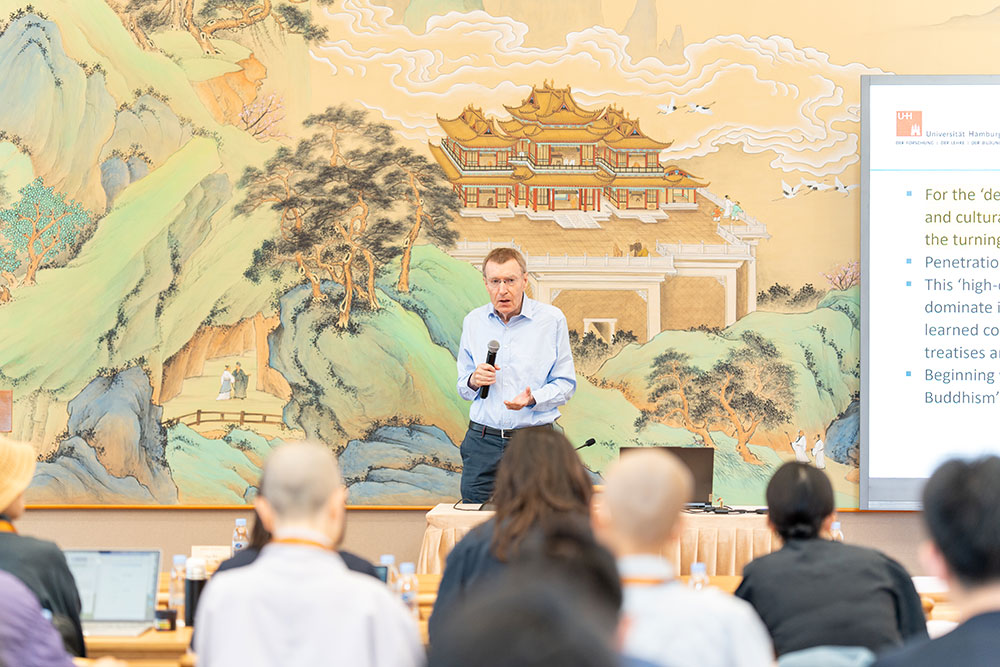
Seminar session led by Professor Michael Friedrich. Republished with permission.
Three lectures complemented the intensive seminars and introduced participants to recent research in Buddhist art, bibliography, and sociology of religion.
Professor Yinggang SUN of Zhejiang University delivered “The Influence of Gandhāra on Chinese Buddhist Art.” He examined the rise of bodhisattva devotion, the creative reworking of Jātaka narratives, and the emergence of new forms of Buddhist visual culture in Gandhāra. Sun argued that the transmission of Gandhāran Buddhism to China involved far more than the movement of artistic styles: it also carried new religious ideas, narrative traditions, and systems of sacred imagery. These developments helped transform the visual language of Chinese Buddhism and left a lasting imprint on the history of Chinese Buddhist art.
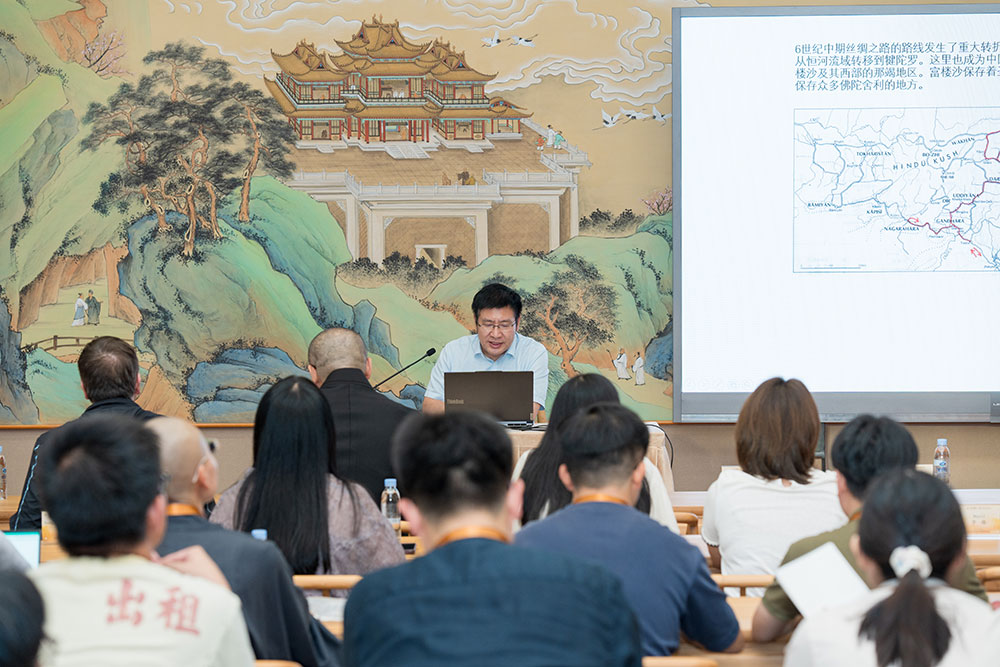
Guest lecture by Professor Yinggang Sun. Republished with permission.
Professor Guodong FENG of Zhejiang University spoke on “Chinese Buddhist Catalogues and the Chinese Buddhist Canon.” Beginning with Dao’an’s efforts to organize the scriptures, Feng traced the emergence of catalogues of texts admitted to the canon, the compilation of the Kaiyuan shijiao lu 開元釋教錄, and the evolution of Buddhist bibliography after the rise of printed canons. He showed that catalogues helped classify scriptures and standardize the structure of the Chinese Buddhist canon, while the copying, printing, reading, and circulation of the canon in turn generated new forms of annotated, introductory, and circulation catalogues. The history of catalogues and the history of the canon, he concluded, are best understood as mutually formative processes.
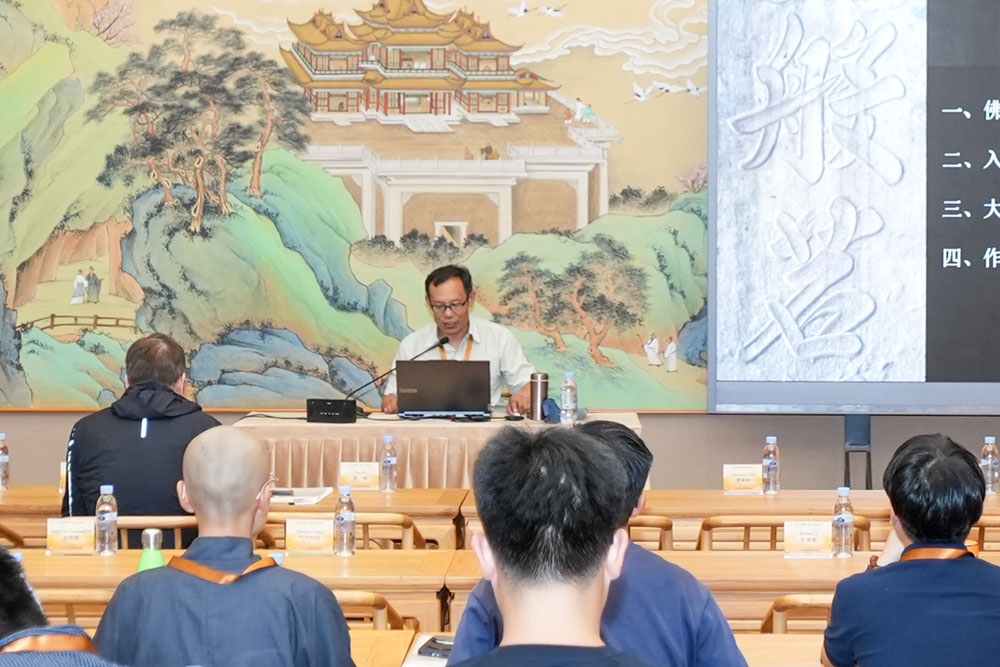
Guest lecture by Professor Guodong Feng. Republished with permission.
In “Buddhism Advancing toward a World Religion via Sinicization: A Weberian Comparative Analysis,” Research Fellow Rong HE of the Chinese Academy of Social Sciences revisited the place of Buddhism in Max Weber’s sociology of religion. By reading Weber’s studies of India and China together, He reconstructed Weber’s account of Buddhism’s emergence, transmission, and transformation through social strata, knowledge production, and religious organization. She also noted Weber’s use of travel records by Faxian, Xuanzang, and Yijing as sources for understanding Indian Buddhism. These Chinese accounts, she suggested, demonstrate the distinctive role of Chinese Buddhism in connecting regions, preserving historical memory, and contributing to Buddhism’s development as a world religion.
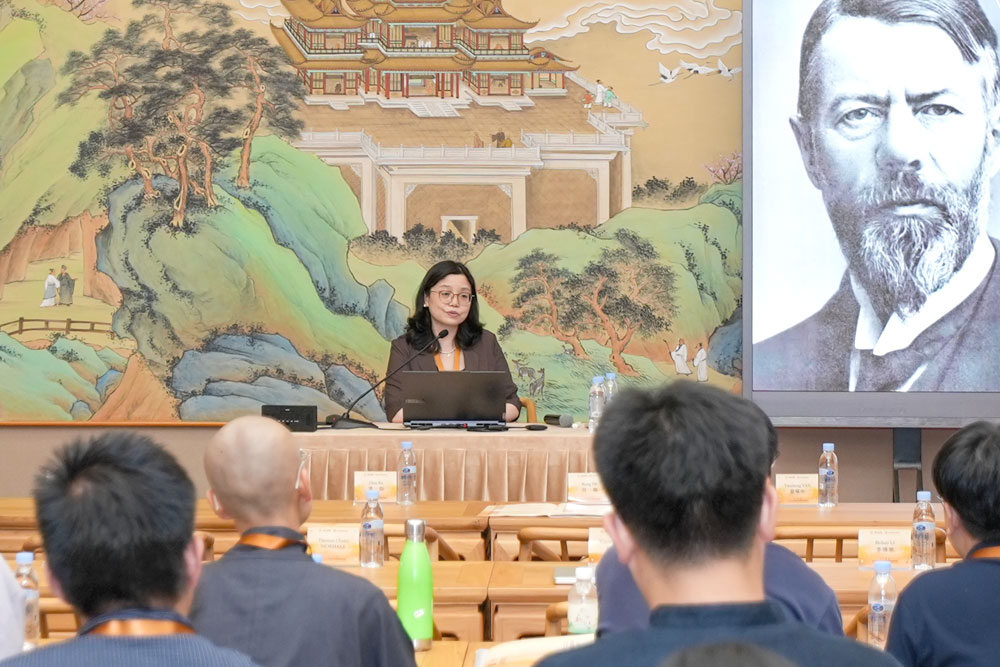
Guest lecture by Research Fellow Rong He. Republished with permission.
Beyond the Classroom: Encountering Mount Kuaiji
Alongside the seminars and lectures, the organizers arranged visits to the Palace of Tuṣita Heaven and an evening visit to Longhua Monastery at Mount Kuaiji. Moving from the classroom into lived religious and cultural settings, participants considered the spatial meanings of Buddhist architecture and its relationship with the humanistic traditions of the region. These visits added a direct, experiential dimension to the textual and historical questions explored throughout the program.
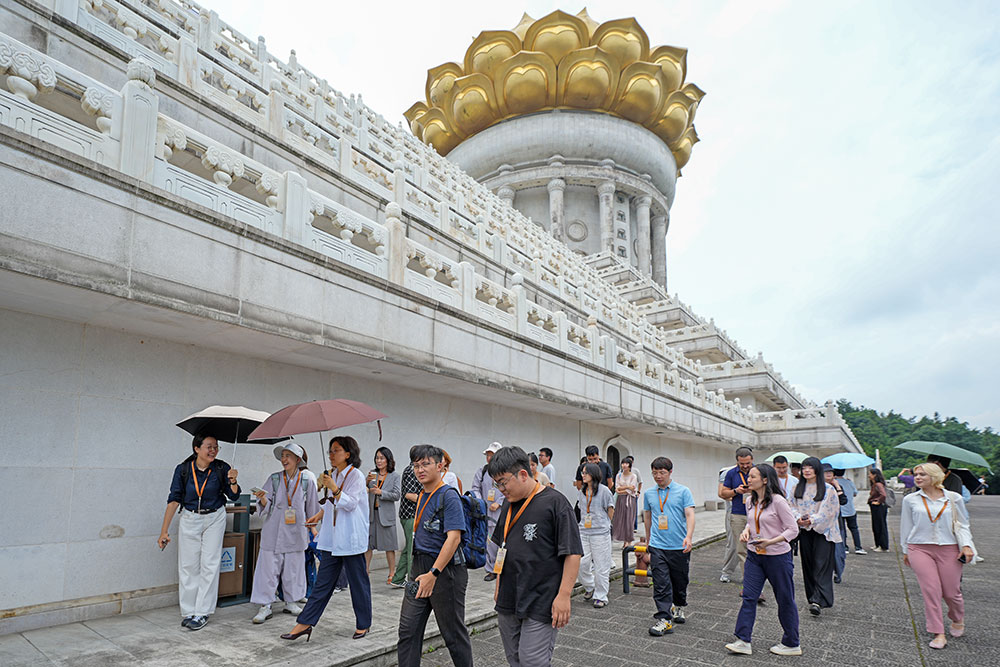
Intensive program students and conference scholars visits the Palace of Tuṣita Heaven. Republished with permission.
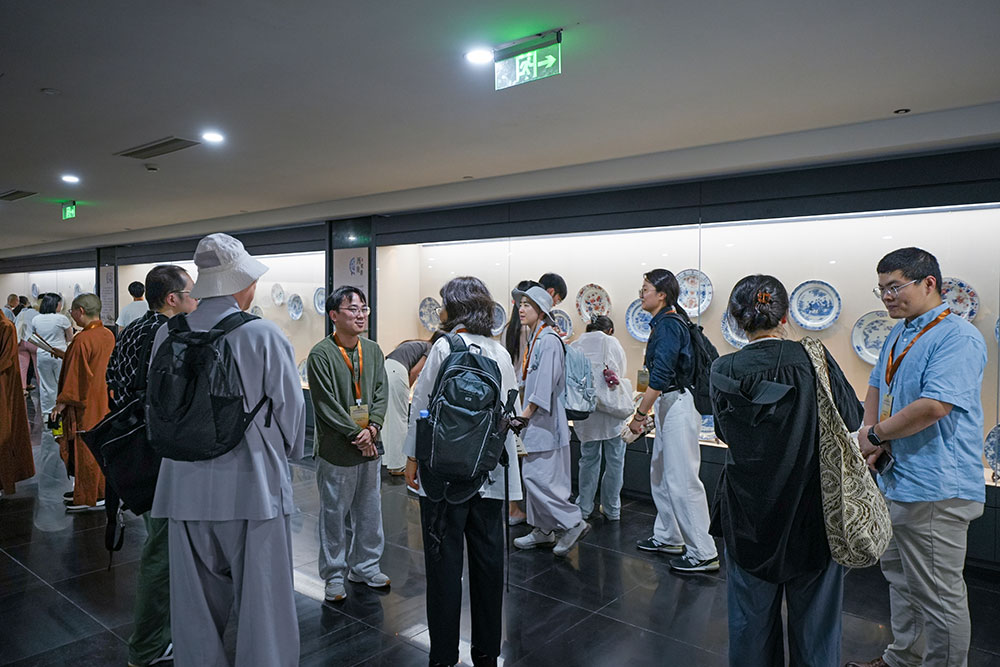
Intensive program students and conference scholars visits the Maritime Silk Road Fine Porcelain Exhibition Hall. Republished with permission.
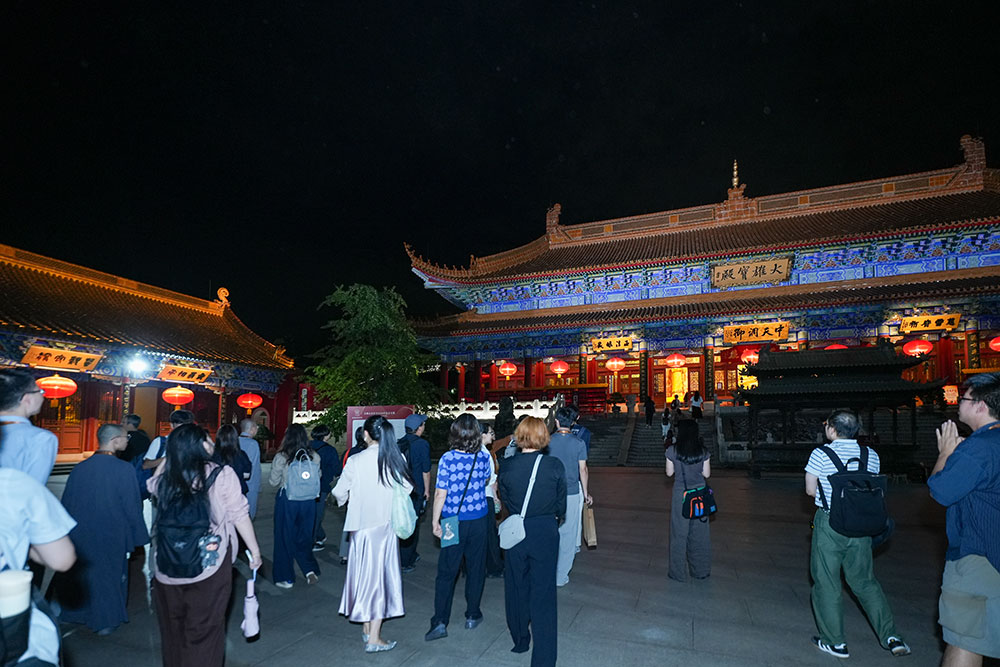
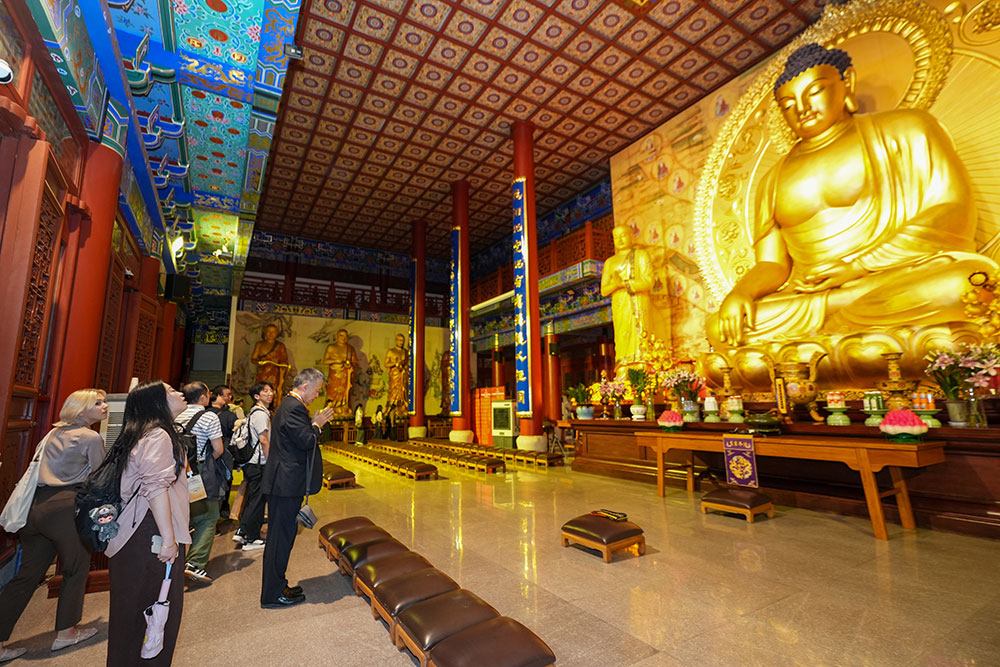
Intensive program students and conference scholars’ night visit to the Longhua Monastery at Mount Kuaiji. Republished with permission.
At the closing and certificate ceremony, outstanding participant representatives reflected on the week’s study and expressed their appreciation to the instructors, organizers, and staff. The speakers were doctoral students Bingming CHENG of Zhejiang University, Sanga BAE of Dongguk University, Jiayi GAO of Peking University, Ruilong GONG of the University of Hamburg, and Mingjun JIN of Sichuan University; postdoctoral fellow Rodolfo MAGGIO of the University of Helsinki; Venerable Tisheng of the Ci’en Academy at Jiangsu Buddhist Academy; and Venerables Longhui and Guoshan of the Mount Kuaiji Advanced Institute for Buddhist Studies.
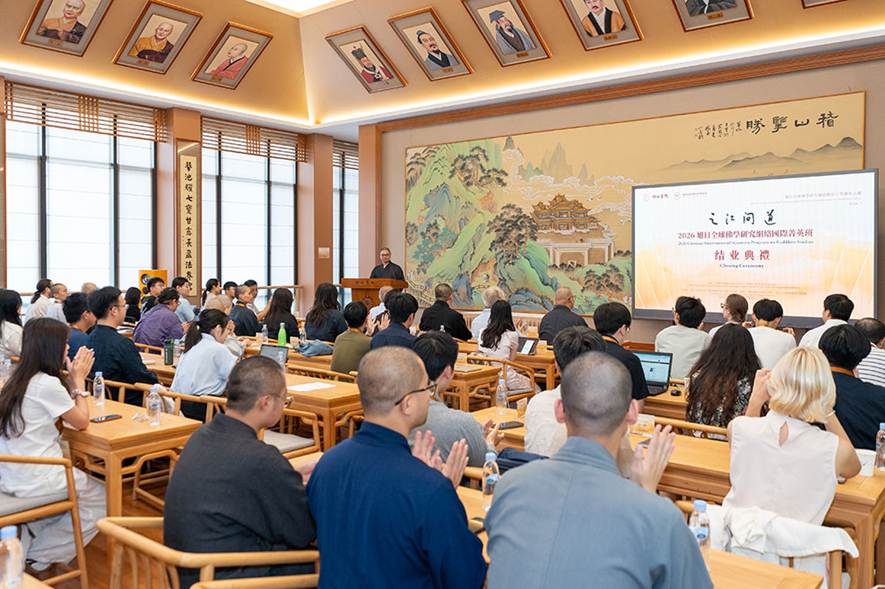
Closing ceremony of the summer program. Republished with permission.
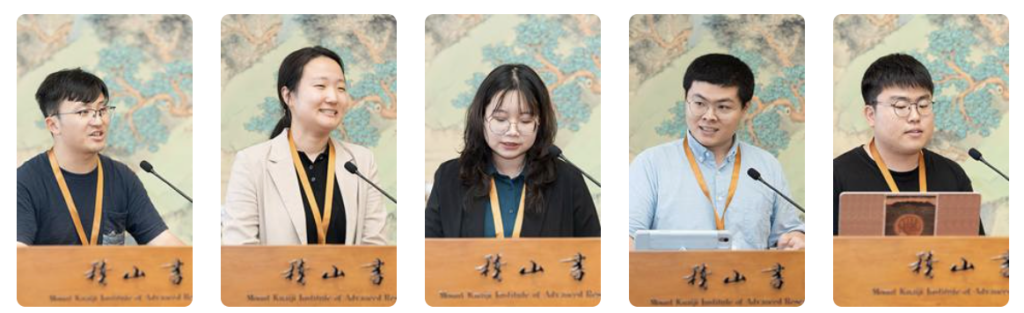
From left to right: Bingming Cheng, Sanga Bae, Jiayi Gao, Ruilong Gong, and Mingjun Jin. Republished with permission.
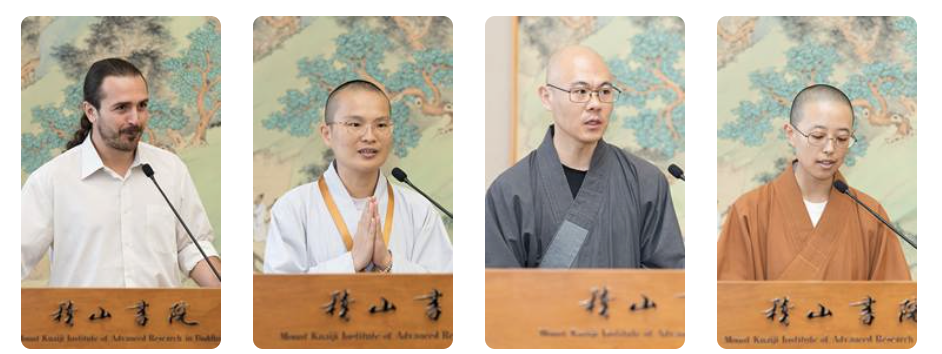
From left to right: Rodolfo Maggio, Venerable Tisheng, Venerable Longhui, and Venerable Guoshan. Republished with permission.
Certificates of completion were then presented by professors Barend ter Haar and Michael Friedrich, together with Venerable Professor Ru Zhan, marking the successful conclusion of the program’s academic activities.
After the courses, participants also visited the Orchid Pavilion (Lanting 蘭亭) Scenic Area in Shaoxing. By viewing calligraphic works, stone inscriptions, and historical displays at close range, they encountered the region’s rich literary and artistic heritage and developed a deeper appreciation of the connections among calligraphy, textual culture, and regional civilization.
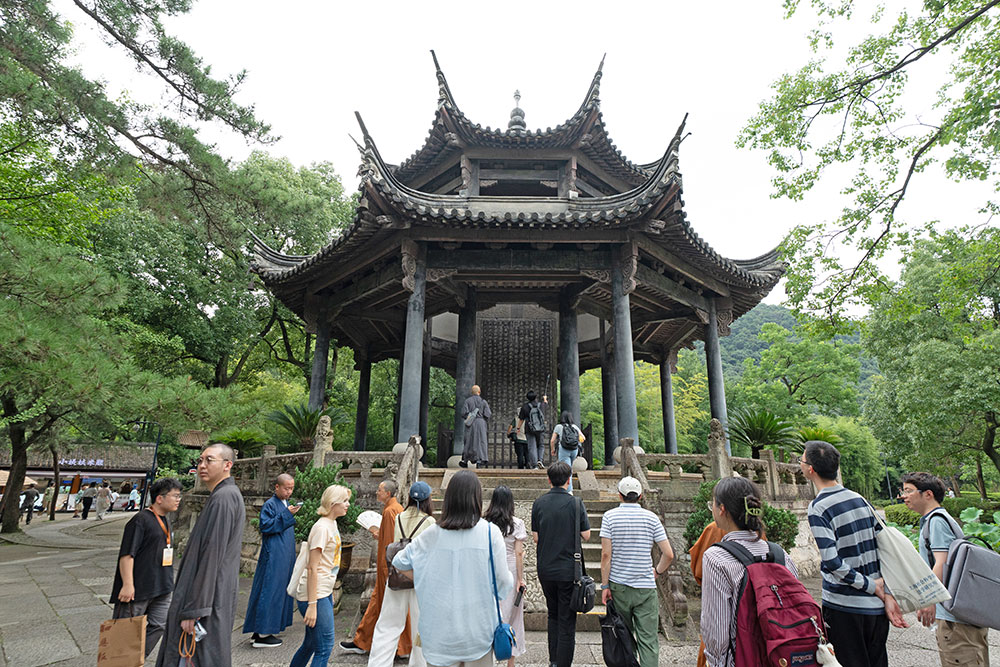
Intensive program students visit the Orchid Pavilion Scenic Area. Republished with permission.
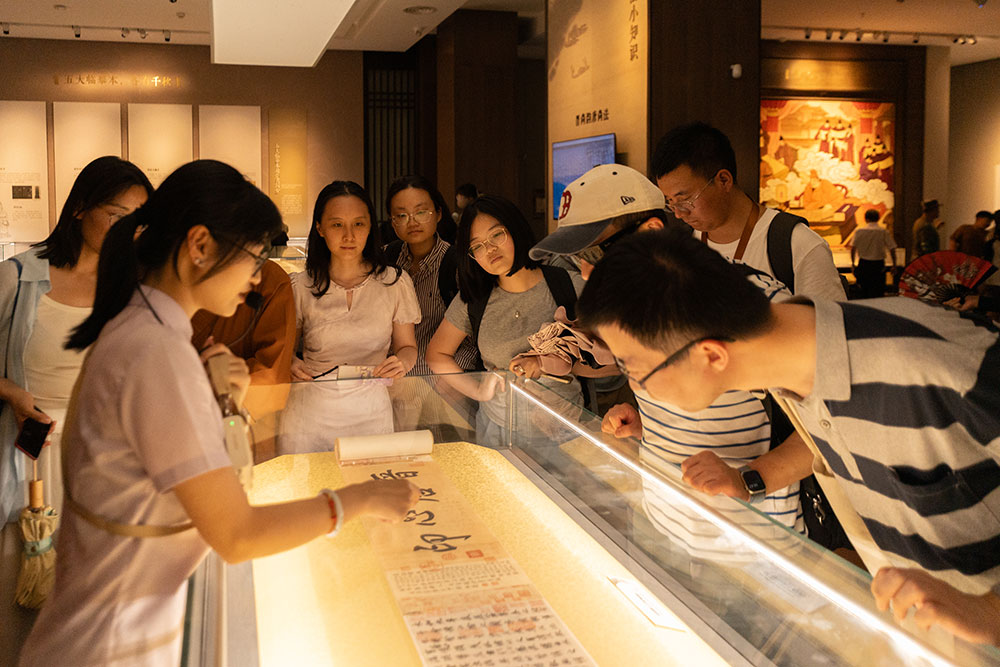
Intensive program students visit the Orchid Pavilion Calligraphy Museum. Republished with permission.
Over one intensive week, the program brought together an international conference, sustained seminars, guest lectures, informal conversations, and cultural visits. It created an open and multilingual forum in which emerging scholars from different countries could compare methods, test ideas, and form new intellectual connections. The meeting of distinct academic traditions and research perspectives at Mount Kuaiji deepened participants’ understanding of Buddhist history, thought, texts, and art.
The 2026 program strengthened ties across the international field of Buddhist Studies and offered valuable support to the development of young scholars and scholar-monastics. The conversations begun at Mount Kuaiji will continue through future research, study, and collaboration, contributing to new forms of cross-regional, cross-cultural, and interdisciplinary inquiry—and to a fuller understanding among the civilizations connected by Buddhism.
Author Bio:
Mingjun Jin, male, of Korean ethnicity and from Yanbian, Jilin Province, China, is a doctoral student at the Institute of Taoism and Religious Culture, Sichuan University, under the supervision of Professor Dawei Wang.
All images courtesy of Mount Kuaiji Advanced Institute for Buddhist Studies.
Source: CJBS News Blog


